Healthy Aging
Evidence-Based Education
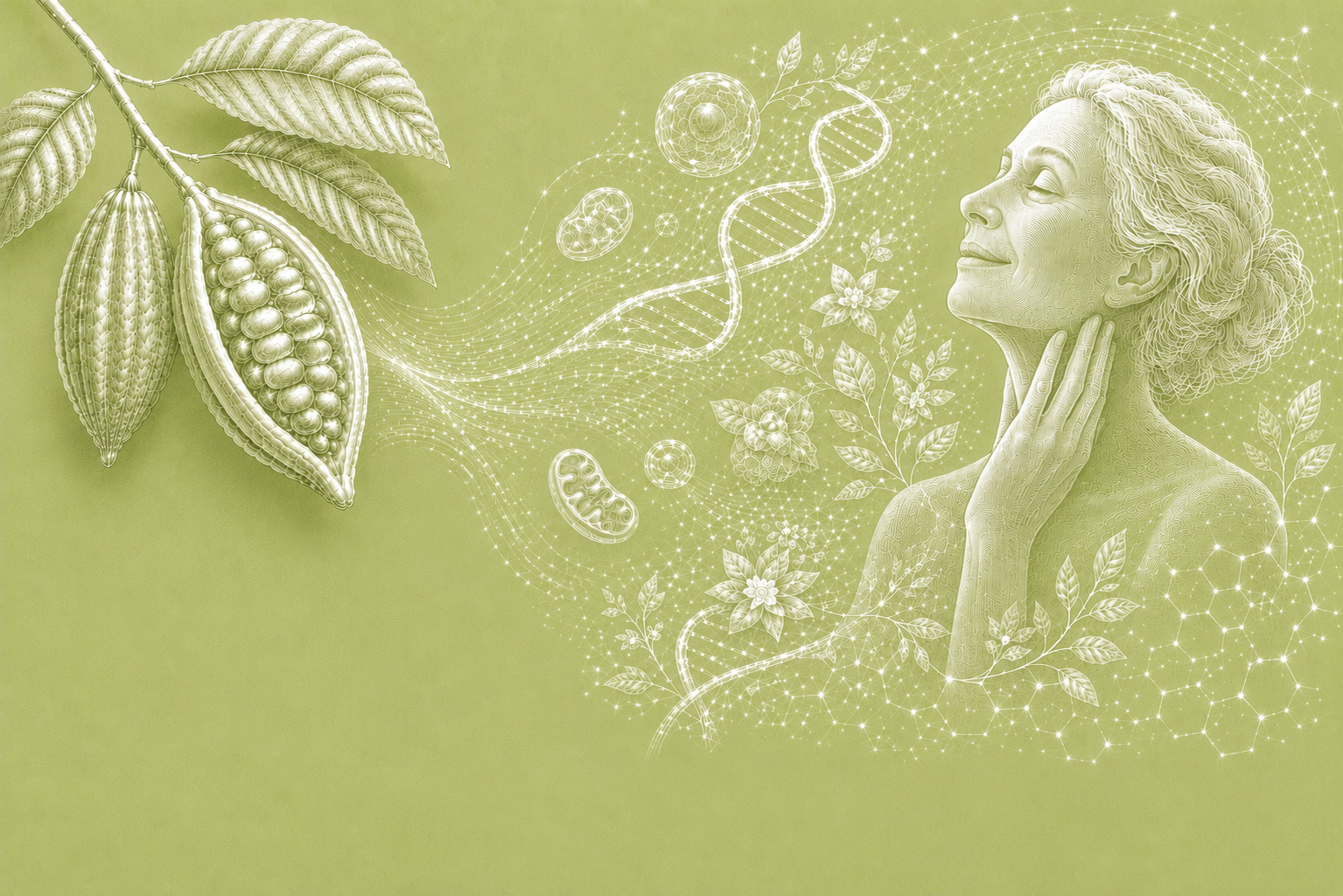
Healthy aging isn't simply about living longer. It's about maintaining the biological systems that allow us to remain active, resilient, and independent throughout life. Emerging research suggests cocoa flavanols may support several of these systems—including vascular function, endothelial repair, physical performance, and healthy inflammatory responses.
Healthy Aging
Supporting Healthy Aging From the Inside Out
How we age is written largely in our blood vessels. Healthy circulation quietly supports the heart, brain, muscles, skin, kidneys, and nearly every organ in the body. As we grow older, blood vessels naturally become less flexible, more prone to inflammation, and slower to repair.
This is where the strongest research on cocoa flavanols has emerged. Rather than promising dramatic longevity or "anti-aging" effects, human studies suggest flavanol-rich cacao may help preserve several biological systems that naturally decline with age—particularly those involved in vascular health, physical function, and cellular maintenance.
IMPROVEMENT AREAS
RESEARCH AT A GLANCE
Skin Health
The 24-week randomized trial showing improved skin elasticity, reduced wrinkles, and reduced photoaging, likely reflecting improved microcirculation and protection against UV-induced oxidative stress.
Exercise Capacity
Randomized trials in older adults demonstrating improvements in VO₂ max, oxygen pulse, exercise capacity, blood pressure, and endothelial function after 30 days of cocoa flavanols.
Inflammation
Meta-analyses of randomized controlled trials suggest cocoa flavanols modestly reduce several inflammatory markers, including C-reactive protein (CRP), interleukin-6 (IL-6), and tumor necrosis factor-alpha (TNF-α).
featured clinical trail
Skin improvement
In a 24-Week Double-Blind, Randomized, Controlled Trial:
1. Wrinkles improved: The primary outcome was facial wrinkle roughness (Rz). After 24 weeks, the cocoa group had a significantly greater reduction in wrinkle roughness than the placebo group.
2. Skin elasticity improved: Gross skin elasticity improved significantly.
The authors concluded: "Regular cocoa flavanol consumption had positive effects on facial wrinkles and elasticity. Cocoa flavanol supplementation may contribute to the prevention of the progression of photo-aging."
HEALTHSPAN
Healthy Aging Is About Function, Not Just Lifespan
Scientists increasingly distinguish lifespan from healthspan.
Lifespan describes how long we live. Healthspan refers to how well we live—the years spent active, independent, mentally sharp, and physically capable.
While no human studies have shown that cocoa flavanols extend lifespan, a growing body of research suggests they may help preserve several biological systems that support healthy aging, including vascular function, endothelial repair, physical performance, and healthy inflammatory responses...
FEATURED CLINICAL TRIAL
Mobilizing the Body's Repair System
In a randomized, double-masked clinical trial involving patients with coronary artery disease, researchers compared high-flavanol cocoa with a nutritionally matched low-flavanol control over thirty days.
Participants consuming high-flavanol cocoa experienced a 47% improvement in endothelial function, a measure of how well blood vessels relax and respond to increased blood flow. Healthy endothelial function is considered one of the earliest indicators of cardiovascular health and tends to decline naturally with age.
Even more remarkably, researchers observed a 2.2-fold increase in circulating vascular repair cells (also known as circulating angiogenic cells). These specialized bone marrow-derived cells circulate through the bloodstream, home to areas of damaged blood vessels, and help maintain the integrity of the vascular lining.
Why This Matters for Healthy aging
Blood vessels are lined by a thin layer of cells called the endothelium, which regulates blood flow throughout the body. As we age, this lining becomes less responsive, making it harder for arteries to relax and deliver oxygen and nutrients efficiently.
A 47% improvement in endothelial function means the blood vessels became substantially better at widening when needed—an indicator of healthier, more resilient circulation. Because every organ depends on healthy blood flow, endothelial function is widely considered one of the most important markers of vascular health, and by extension, how well we age.
Healthy Aging
Why processing matters
Not every cocoa or cacao product contains the same amount of flavanols. Fermentation, roasting temperature, storage, and other manufacturing decisions can all affect the concentration of these naturally occurring compounds.
Alkalization—often called Dutch processing—can substantially reduce flavanol content. This is why research findings involving specially prepared, flavanol-rich cocoa cannot automatically be applied to every chocolate bar, cocoa powder, or cacao product on the market.
healthy aging
Current scientific consensus
The strongest evidence linking cocoa flavanols to healthy aging centers on vascular biology. Human clinical trials consistently demonstrate improvements in endothelial function, blood vessel flexibility, and biomarkers associated with vascular repair.
Additional research suggests potential benefits for physical performance, skin health, and healthy inflammatory responses. While these findings are promising, no human studies have demonstrated that cocoa flavanols extend lifespan or reverse aging itself.
Instead, researchers increasingly view cocoa flavanols as one dietary component that may help preserve the biological systems supporting healthy aging and long-term health.
REPRESENTATIVE RESEARCH
The studies below represent several important human trials and evidence reviews that have shaped the current understanding of cacao and healthy aging.
Heiss et al. (JACC)
Randomized crossover trial
47% improvement in endothelial function
2.2× increase in circulating vascular repair cells
Read StudyOlder Adult Exercise Trial (2023)
Improved exercise capacity
VO₂ max
Blood pressure
Endothelial function
Read StudyYoon et al.
Yoon et al.
24-week randomized trial
Improved skin elasticity
Reduced wrinkles
Reduced photoaging
Read studyMeta-analysis
Reduced inflammatory markers
Improved vascular function
Skin improvement study
Improvements in wrinkles and skin elasticity.
https://pubmed.ncbi.nlm.nih.gov/26581682/References